
Building Competitive, Responsible & Future-Ready Organisations
3-Day Executive Masterclass
- 10th, 11th & 12th September 2026
Executive Masterclasses
Industry Case Studies
Business Simulation
Networking
Field Immersion
Executive Masterclasses
Industry Case Studies
Business Simulation
Networking
Field Immersion
THE SUSTAINABILITY IMPERATIVE
Sustainability has evolved from a reporting obligation into a strategic business imperative. Regulatory expectations, investor scrutiny, and stakeholder demands are reshaping how organisations compete, create value, and build resilience. Yet many organisations continue to treat ESG and CSR as standalone initiatives rather than integrating them into enterprise-wide strategy.
The ET Edge GSA Masterclass Series – Delhi Edition is designed to bridge this gap. Through a three-day executive learning experience featuring expert-led masterclasses, real-world case studies, immersive business simulations, and a field visit, participants will gain practical insights to embed sustainability into strategy, governance, finance, operations, and organisational transformation.
3-Day Executive Programme
Intensive learning with expert-led modules, simulations & field immersion
Real-World Application
Case studies, boardroom simulations & hands-on workshops
Practical ESG & CSR
Covering strategy, governance, climate, finance & social impact
Actionable Roadmap
Leave with a practical sustainability plan for your organisation
Key Learning Outcomes
Key Learning Outcomes
- Integrate ESG into business strategy and governance
- Navigate BRSR, CSR, and global sustainability frameworks
- Develop climate transition and decarbonisation roadmaps
- Build resilient, responsible value chains
- Leverage sustainable finance and impact measurement
- Use AI and digital tools to accelerate ESG performance
Integrate ESG into business strategy and governance
Navigate BRSR, CSR, and global sustainability frameworks
Develop climate transition and decarbonisation roadmaps
Build resilient, responsible value chains
Leverage sustainable finance and impact measurement
Use AI and digital tools to accelerate ESG performance
Delhi Edition
Speakers Coming Soon
Delhi Edition
Speakers Coming Soon
Speakers








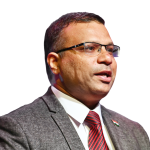

Social Scientist and Invited CSR and Sustainability Expert - BIS (GoI), CII, BCC&I, ICC, Balmer Lawrie, EBG Federation


WHO SHOULD ATTEND
Business leaders and CXOs
Driving sustainability, strategy, transformation, and enterprise-wide decision making.
Sustainability, ESG and CSR Professionals
Including CSOs, ESG leaders, CSR heads, sustainability teams, and climate managers.
Risk, Governance, Finance and Reporting Leaders
Including BRSR, ESG reporting, compliance, investor relations, and CFO offices.
Policy, Public Sector and Advisory Professionals
Including government officials, regulators, consultants, and sustainability advisors leading organisational and sectoral transformation.
Agenda
FOUNDATIONS, REPORTING & RISK
09:00-10:00REGISTRATION AND BREAKFAST
10:00-10:15Welcome & Program Overview
10:15-11:30Module 1: Embedding Sustainability into Enterprise Strategy: Building an Integrated ESG & CSR Framework
Speaker:
Prof. Kaushik Ranjan Bandyopadhyay
Chairperson, Centre for Business Sustainability
Member, Board of Directors, Enterprise Incubation Centre (EIC), IIM Lucknow
This session explores how organisations can integrate ESG and CSR into core business strategy to create long-term value. Participants will learn practical approaches to align sustainability with governance, decision-making, performance management, and business growth, moving beyond compliance to build resilient, competitive, and future-ready enterprises through enterprise-wide sustainability leadership
11:30-12:30Module 2: Governance, Risk & Responsible Business: Navigating India's Evolving ESG Landscape
Speaker:
Sheetal Sharad
Chief Ratings Officer, ICRA ESG Ratings
As ESG regulations continue to evolve and stakeholder expectations rise, organisations must move beyond compliance to build robust governance systems that strengthen accountability, manage sustainability risks, and enhance credibility. This session explores India’s evolving ESG regulatory landscape, governance best practices, disclosure frameworks, risk management, and assurance processes, equipping participants to build transparent, resilient, and investor-ready organisations.
12:30 – 13:00Case Study A: Governance, Transparency and Building Investor Confidence
Speaker: To be announced
This case study examines how a listed company strengthened its governance and reporting practices to enhance transparency, improve disclosure quality, and build greater investor confidence.
13:00 – 14:00Networking Lunch
Speaker: Ankit Todi, Group Chief Sustainability Officer, Mahindra Group
This case study explores how a diversified business group manages ESG reporting across multiple entities. It covers data collection and verification, governance structures, materiality assessment at group and business-unit levels, and the development of disclosures that satisfy regulatory requirements while meeting investor expectations.
14:00 – 15:30Module 3: CSR Beyond Compliance: Designing High-Impact Social Investment & Responsible Business Strategies
Speaker:
Prof. Rohan Sarma
Social Scientist & Senior Fellow, Centre for Responsible Business (CRB)
Through this session, participants will explore how organisations can transform CSR from a compliance obligation into a strategic business function by designing high-impact social investment programmes aligned with ESG priorities and the Sustainable Development Goals (SDGs).
15:30 – 16:00Case Study B: CSR as a Strategic Driver of Community Resilience and Business Value
Speaker: To be announced
This case study explores how a large corporate foundation partnered with local governments, NGOs, and communities to design and scale CSR initiatives focused on livelihoods, education, and climate resilience.
16:00 – 16:30Case Study C: Enterprise ESG Transformation in a Diversified Business
Speaker: To be announced
This case study examines how a diversified multinational organisation embedded sustainability across business strategy, operations, procurement, and investment decisions.
16:30 – 17:00Exercise: ESG Maturity Assessment – Evaluating Your Organisation's Sustainability Readiness
Participants will assess their organisation’s current sustainability maturity and identify opportunities to strengthen ESG readiness and strategic integration.
End of Day 1
Participants will assess their organisation’s current sustainability maturity and identify opportunities to strengthen ESG readiness and strategic integration.
STRATEGY, FINANCE & EXECUTION
09:30 – 10:00Registration and Breakfast
10:00 – 11:00Module 4: Climate Transition, Sustainable Finance & Decarbonisation Pathways
Speakers:
Sharif Qamar
Associate Director, Transport & Urban Governance, TERI
Akash Deep
DGM & Treasurer, GRIHA Council – Decarbonizing Habitat Programme, TERI
This session explores how organisations can move beyond Net Zero commitments to develop practical climate transition strategies that reduce emissions while strengthening business competitiveness. Participants will gain insights into climate risk assessment, decarbonisation planning, transition finance, and sustainable finance instruments that enable organisations to fund and accelerate their sustainability journey.
11:00 – 11:30Case Study D: Driving Sustainable Operations & EHS Excellence in the Pharmaceutical Sector
Speaker:
Ganesh Chandra Tripathy
Global Head – EHS & Sustainability, Piramal Pharma Limited
This practitioner-led case study shares practical insights into integrating resource efficiency, water stewardship, waste management, climate action, operational excellence, and responsible supply chains while balancing regulatory compliance, business performance, and long-term sustainability outcomes.
11:30 – 12:30Module 5: Building Resilient Value Chains: Circular Economy, Responsible Sourcing & Nature
Speaker:
Dr. Mini Govindan
Senior Fellow
This session explores how organisations can build resilient and future-ready value chains by managing Scope 3 emissions, strengthening supplier engagement, improving resource efficiency, and embedding sustainability across the value chain to meet evolving regulatory, investor, and stakeholder expectations.
12:30 – 13:00Case Study E: Decarbonising Heavy Industry – Embedding Sustainability into Steel Manufacturing & Business Transformation
Speaker:
Naveen Ahlawat
President & Head – Sustainability & Decarbonization, Jindal Steel Ltd.
This case study explores how steel manufacturers are driving the transition towards low-carbon and sustainable operations by embedding sustainability into business strategy, manufacturing processes, and organisational transformation.
13:00 – 14:00NETWORKING LUNCH
14:00 – 15:00Module 6: Nature-Positive Business: Biodiversity, Natural Capital & Corporate Resilience
Speakers:
Dr. Pushplata Singh
Director, Sustainable Agriculture, TERI
Mr. Shailesh Ganeshrao Tembhurnikar
Distinguished Fellow, Land Resources, TERI
Nature is rapidly becoming a strategic business priority, and this session explores how organisations can identify, assess, and manage nature-related risks by integrating biodiversity and natural capital into corporate strategy, governance, and decision-making. Participants will examine emerging global frameworks, including TNFD, and learn how nature-positive strategies can strengthen resilience, unlock new opportunities, and create long-term business value.
15:00 – 16:30Executive Board Simulation: Leading Sustainability Through Business Transformation
Speaker:
Senior Representative, Council of Corporate Sustainability, TERI
In this immersive boardroom simulation, participants work as an executive leadership team to navigate competing business priorities while developing an integrated enterprise sustainability strategy. Through collaborative decision-making, participants will prioritise ESG investments, allocate resources, strengthen governance, and respond to evolving regulatory, investor, and stakeholder expectations before presenting a practical sustainability roadmap that balances commercial performance with long-term environmental and social value.
ESG in Action
10:30 – 13:30Field Immersion: Sustainability in Action – Learning from Large-Scale Implementation
Participants will visit a leading sustainability project to experience first-hand how ESG strategies are translated into operational practice. The visit concludes with a facilitated reflection session that connects field learnings to participants’ own organisational priorities.
Embedding Sustainability into Enterprise Strategy
The biggest sustainability challenge today isn’t ambition—it’s integration. This session explores how organisations can move ESG and CSR from standalone functions into the heart of enterprise strategy, governance and business transformation.
Key Focus Areas:
- Integrated ESG & CSR strategy
- Enterprise governance
- Performance management
- Business transformation
- Competitive advantage
- Real-world enterprise case study
CSR Beyond Compliance
CSR has evolved beyond regulatory compliance into a strategic lever for creating long-term business and social value. Learn how organisations can design impactful programmes that align with ESG priorities and deliver measurable outcomes.
Key Focus Areas:
- Strategic CSR planning
- SDG alignment
- Shared value creation
- Impact measurement
- Community partnerships
- Industry case study
Governance, Risk & Responsible Business
Strong governance builds trust, strengthens accountability and enables sustainable growth. This session focuses on India’s evolving ESG landscape, disclosure frameworks and governance practices that inspire investor confidence.
Key Focus Areas:
- BRSR & BRSR Core
- ESG governance
- Due diligence & assurance
- Greenwashing risks
- Board accountability
- Transparency & reporting
Climate Transition & Sustainable Finance
Climate transition requires more than ambitious commitments. Explore practical decarbonisation strategies alongside sustainable finance mechanisms that enable organisations to fund and execute long-term climate action.
Key Focus Areas:
- Climate risk
- Net Zero strategies
- Sustainable finance
- Transition finance
- Decarbonisation
- Climate resilience
Building Resilient Value Chains
Future-ready organisations build responsible supply chains that are resilient, circular and nature positive. Learn how sustainability can be embedded across operations and procurement.
Key Focus Areas:
- Scope 3 emissions
- Circular economy
- Responsible sourcing
- Biodiversity
- Supplier engagement
- Value chain resilience
Measuring What Matters
Sustainability success depends on measuring performance and building organisational capability. Learn how leading organisations use ESG metrics, leadership and governance to drive continuous improvement.
Key Focus Areas:
- ESG KPIs
- Performance dashboards
- Impact measurement
- Sustainability communication
- Enterprise roadmap
- Leadership transformation
Executive Board Simulation
Apply your learning in an immersive executive boardroom simulation where participants make strategic ESG decisions, prioritise investments, allocate capital and develop an enterprise sustainability roadmap.
Key Focus Areas:
- Materiality assessment
- Strategic decision-making
- ESG investments
- Governance planning
- Leadership collaboration
- Business transformation
CSO Leadership Panel: From Ambition to Execution: A candid discussion with leading Chief Sustainability
Officers on:
- Internal challenges and resistance
- Data and reporting complexities
- Aligning business and sustainability goals
- Lessons from real-world implementation
Field Immersion: Sustainability in Action
Experience sustainability beyond the classroom through an immersive visit to a live sustainability project, gaining first-hand exposure to implementation, governance and operational excellence.
Key Focus Areas:
- Operational sustainability
- ESG implementation
- Governance models
- Stakeholder engagement
- Performance measurement
- Practical learning
Partners
Campus Partner

Academic Partner
Media Partner